Sunday, January 8, 2012

Friday, January 6, 2012
The Oily Affairs of a Profligate Nation
However, it is clear that all Nigerians are justifiably angry. By Nigerians I refer to the majority of people who have their own hands in their own pockets!
Despite the fervent uproar that heralded this unpopular government policy, some things have been achieved. What amazes me is the speed at which these two things have been achieved:
The government has been a big lie, its policies a poignant reminder of the wickedness of man to man and its appetite for waste compares only to Usain Bolt’s abilities to break his own world records over and over again. Subsequent Nigerian governments have elevated corruption and wasteful spending to a new art form. No stable nation competes with us in this genre, we are record breakers!
Miraculously too, our leaders also forgot to build additional refineries to cater for the burgeoning population. Our three refineries were built when Nigeria’s population was about eighty million people. While we doubled in size, our leaders were more focused on lining their own pockets than planning for a growing population.
This problem of lack of internal capacity to refine crude oil is perennial, just that the politicians took over and devised a clever way of making money from their own incompetence.
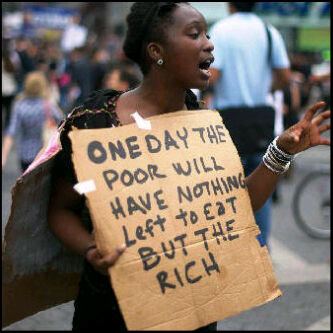
Our internal debt is 5 trillion naira. External debt is back to 35 billion dollars. Excess crude oil account is down to zero. We are broke yet the only rich people in Nigeria are politicians and some pastors. Politicians who earn more than every other earthly government and pastors who collect earthly money, lay hands on and promise heavenly bliss to men of shady character. Some of these super rich pastors are not saying anything now. Some of them are speaking as a matter of expediency. Some of them have private jets with which to fly out of Nigeria. They share that same luxury with the dirty politicians they bless and celebrate with front row seats in their churches.




I have posted a new entry on how our money is stolen through overblown and unrealistic budgets. I picked out line items from the budgetary allocations of the office of the Vice President in the 2012 budget. Please read that post. It makes interesting reading.
Monday, January 3, 2011
2011: EXPLOSIONS AND IMPLOSIONS IN NIGERIA

It is 2011, not news right? I guessed.
I share a healthy dose of the unfettered joy and hysteria that occasions the transition between two years but not the materialistic self-indulgence that now characterizes the celebration of both Christmas and the New Year. Everywhere in the world, retailers target and promote the hedonistic consumerist lifestyle that screams “buy, buy and buy”. My approach to the festivities has always been that of “contained optimism”. My birthday falls on the 4th of January and birthdays for me are usually introspective. I usually reflect on the previous year and plan for the New Year. On my birthday, chances are that I would be moody than excited. I appreciate the fact that birthdays are yearly milestones but I have never believed in partying and celebration that accompanies birthdays. This also aligns with my view of Christmas and New Year celebrations. I have learnt to “count my days so that I might apply myself to wisdom”, after all the difference between one year and another is a second. Amidst all the frenetic prayers of the faithful every thirty first of December, I thank God for the gift of His protection over my life and another three hundred and sixty-five chances at making impact in my life and that of others and quietly start refining my action plan for the year.
I was already in church on the 31st 2010 when I heard about the explosions in Abuja, the capital of Nigeria. As usual the details were scanty and casualty figures ranged from moderate to catastrophic. I left the main church auditorium almost delirious and sauntered into the restaurant in my church to satisfy the news hound in me. I quickly pieced together the facts of the matter. Revelers at the Mogadishu Barracks were jolted by explosions which killed four people on the spot and sent several people to the hospital with various degrees of burns and immeasurable trauma. This location, known to most people as the Abacha barracks was known for its bustling Mami Market which served deliciously spiced fish of various sizes with fries and bottled drinks of any kind. Abacha Barracks was the watering hole of choice for residents of Karu, Kubwa, Gykoyi, Nyanya, Idu and Karimu who would rather “recharge” in a watering hole than brave the intimidating traffic that builds up every evening on their way home.
The elitist nature of Abuja and the prohibitive cost of such liberties in the metropolis, the relative affordable pricing of the offerings in Abacha Barracks also attracted residents from Wuse, Garki, Gwarimpa and other areas of the Abuja metropolis. On several visits to Abuja, I have paid short visits to the Mami Market to buy their specialty; roasted fish and retire to my hotel room, “settle down” and do justice to the fish. The Mami market would remind any visitor of the resilience of the Nigerian family especially the military family. This watering hole was run exclusively by military wives and daughters of soldiers who needed to augment their financial realities and support their breadwinners. The sights and scents of the Mami market would delight any tourist who is interested in culinary adventurism. Fishes of different shapes and sizes were grilled in several open fires and served with several condiments and spices in large trays accompanied with very cold drinks. The market catered for the budget-conscious patron and the lavish-indulgent. Nicely-dressed men and women trooped in and enjoyed the delicacies without raising and eye-brow about the near-derelict state of the environment. It reminded me of Nigeria, yes Nigeria.
I have painted the picture of the environment in the Mogadishu Barracks in order to give my readers a lucid psychography to set a stage for several questions that stirred in my mind as I stood glued to the television and wondered: why would anyone want to bomb the Mami market and the Mogadishu Barracks? Why would anyone plant a bomb in a market operated by women and children? Who would have the temerity and fool-hardiness to plant a bomb in a barrack? What would anyone gain by inflicting such carnage on the country and fellow human beings? What does this portend for Nigeria and its future considering the imminence of elections? Why did the perpetrators of this act choose the date, 31st December 2010?
The answer struck me a few minutes before midnight: 2010 was the year of explosions but 2011 shall be the year of implosions.
You will recall that the incident and frequency on bomb explosions in Nigeria was near zero if you e excluded the dastardly murder of Dele Giwa during the Babangida years. Bombs surfaced in the national consciousness of Nigeria again in the Yaradua era as the Niger Delta issue escalated and Nigeria watched as misguided miscreants seized control of a genuine cause and made businesses out of carnage and kidnapping. Under Jonathan Ebele Goodluck in 2010, we transitioned from militancy to full scale kidnapping for economic reasons and finally to indiscriminate use of bombs and incendiaries.
On the first of October, 2010 we witnessed the first set of explosions which brought national attention to the ineptitude of the security apparatus to deal with any form of organised, pre-meditated and co-coordinated attack. Our plethora of security agencies could not gather and share actionable intelligence to deter such a flagrant assault on the nation on her independence anniversary. The Independence Day bombing dented the image of Nigeria in the eyes of the international community and betrayed what discerning Nigerians had long suspected: that we do not have a president who could handle crisis! The president did not have the statesmanship required to handle a matter of such importance and expediency. He rushed to the defense of MEND and quickly invited MEND chieftains to Aso Rock to show solidarity with “our brother and president of Nigeria, Jonathan Goodluck”. How could you quickly exonerate a militant body that took responsibility for the bombing without the conclusion of preliminary investigations? The shoddy and pedestrian handling of this crisis called into question, the intelligence and competence of the aides of the President. Henry Okah and his brother were quickly arrested in South Africa and Nigeria and charged to court. A political adversary Raymond Dokpesi was summarily arrested, interrogated and inserted in to the plot. I am sure Henry Okah must be smiling somewhere in his cell now. While this script was playing out, more oil pipes were being blown up in the Niger Delta and more people were being kidnapped in the South East. It took a “crack” team of police and Army teams to liberate Abia from the grip of Osisikankwu, the kidnap king.
We must not forget the very peaceful waters of the Lagos port welcomed a seemingly innocuous ship which berthed in Nigeria without any fuss or incident. It took intelligence from the FBI to alert Nigerian security agencies that the ship had thirteen containers filled with rocket –propelled grenades, shells, guns and ammunitions that could overthrow the government in Benin, Liberia or Togo if put in the right hands. The Jury is still out on why Iran shipped this explosive cargo to Nigeria and who wanted to cause more explosions in Nigeria in 2010.
If the attempt to bring in military hardware was thwarted in Lagos, would-be perpetrators soon found other means of achieving explosions as the fragile peace in Jos was once-again interrupted by five explosions which killed and maimed many people. The saga of Jos remains a classic case of “how to ruin paradise”. The explosion in Jos occurred on the twenty-fourth of December 2010 while Christians were getting ready to attend church service marking Christmas Eve. While conspiracy theories and counter-theories were being advanced for the Jos bombings, a PDP aspirant for governorship in Bayelsa learnt an important lesson in politics when a bomb exploded at his rally venue: watch your back! If anyone thought this would be the end of explosions in 2010, all such hopes were dashed a few hours to the new year by the Abuja blasts.
As fervent prayers started an hour to midnight in my church on the thirty-first of December, my mind was confused. I listened to the cacophony of prayers assaulting my ears, people asking God for breakthroughs, upliftment, success, protection and appointments. I wondered if anyone here linked all of their requests to Nigeria and the survival of Nigeria; just as the Bible asks us to “pray for Jerusalem”. I was about giving up on praying when my pastor suddenly interjected: “we now have to pray for Nigeria, that Nigeria will survive and be a peaceful place for all of us to actualize our goals and aspirations”. I was dumbfounded that my pastor read my mind perfectly. He subsequently itemized other prayer points about Nigeria that gladdened my heart. When I finally had the opportunity to pray alone, I asked for God to replace explosions with implosions in Nigeria.
Guess what? I think my prayer was belated. He had started doing it in 2010. He will just finalise it in 2011.
We have had more bombings and explosions under the PDP-led government than under the numerous stints of the military. We have had more political assassinations under the PDP that we had during the 1966 coup and subsequent coups. Aside dying in office or in over-speeding official convoys, more PDP members have died from assassinations than from any political party in the history of Nigeria. There has been more violence in one PDP-controlled states that in all the other states put together. It is clear that the foundation of the PDP is deeply rooted in the ethos of the military founding fathers. The language of its principal officers typifies the military mentality. Such phrases as “do or die” and the “PDP must capture Lagos” tells you more about the thought process and actions of the party than any well-edited campaign advertisement. The flagrant abuse of power, disregard for the rule of law and thuggery exhibited by the PDP says more about the party manifesto than the allure of its umbrella. The incessant carpet-crossing of its members from one political party to the other in the face of adversity points to a total lack of ideology or core value. This is not to preclude that other political parties in Nigeria are better and have well-established ideologies or value. In reality, all political parties in Nigeria thrive on name-dropping an “Awolowo”, "Azikiwe" or promising the masses power, water and good roads.
If Nigeria must experience peace in 2011, the PDP will be the first element to implode. For Nigeria to increase instability in 2011, the hegemony of the behemoth Peoples Democratic Party must decrease and ultimately implode. And it is already happening.
Arguably the most credible face of the PDP in recent times in Nigeria has been Professor Dora Akunyili. She was the NAFDAC czar who never quite made the mark as Minister of information. Just before the year ran out, she dumped the PDP and joined APGA to pursue her senatorial ambition. This tells every analyst something: she has gauged the barometer of opinion in her constituency and noted that the PDP has not thrived because the Igbos have never benefitted under the PDP. Eastern arterial roads are clearly as bad as they were eleven years ago when the PDP assumed office. Selfish as her move may seem, it is a pragmatic-realist move that is ominous for all students of politics. PDP is going down.
The Special Adviser to the President on amnesty joined the shortlist of deserters when he joined the Labour party to contest the gubernatorial election in the President’s home state of Bayelsa. Although he has been tight-lipped on the reasons for his jumping ship, everyone thinks the squabbles in the PDP over presidential aspirant and other contests are death signs sign-posting the beginning of the end for the ruling party.
As the Kwara drama unfolds, I am sure that further implosions of the ruling party will follow a few things will happen in Nigeria that will ensure that Nigeria witnesses peace in 2011. That is my prayer!
Thursday, September 30, 2010
THE NIGERIAN EXPERIMENT AT FIFTY
Wednesday, November 28, 2007
BEATING STRESS:HANDS DOWN
Work is a very difficult thing to contemplate. In this fast-moving rat race that our world has become, it is becoming more Herculean to look at work through the eyes of a philosopher. Work is becoming life and life, separate and divorced from work is almost inconceivable. We work to live and live to work.
Many a high-flying, A-band, top performing executive is achieving and surpassing the targets at work, gathering plaudits and accolades from bosses and colleagues and moving rapidly up the corporate ladder. Yes, doing good honest work and earning a commensurate pile of dough is not a bad idea.
The big question is: “AT WHAT COST?”
Red Bull, Power Horse, Coffee, Kola nuts are the fuel on which some of today’s super performance is combusted. Sleep deprivation (burning the mid night oil), overwork and other health-draining tactics are being used by executives to meet never-ending targets and goals. Some of you take your work home!
Consider the wonderful nation that we live in and the contributory effect some daily event have on our lives. You probably drive to work for two hours and drive home for three hours in thick traffic congestion, smoke and noise, only to get home and realize that PHCN has done what they really know how to do: deny us of power. So you put on your own generator just like several other people in your neigbourhood and donate your own quota of noise and effluence to the environment. No wander the earth is warming up!
After taking your bath, you lie down on your bed to sleep, but morpheus denies you its potent dose. You cannot sleep. You roll all over the bed and think through the night only to hear the cock crow: morning has come. Off you go, to work, again! How rested are you? If you live in Alakuko, Alagbado, Ipaja and some of these places, I bet you wake up at four-thirty, just to make it to work on time.
It does not take long for the emotional reserves to drain away when they are not replenished and recharged. The end result is stress and its attendant ailments. Stress is real and it kills.
Many fatalities have been occasioned by the silent ominous diseases caused by stress: high blood pressure, heart diseases, cholesterol, obesity, miscarriages, skin lesions, chronic fatigue, dizziness and other health dysfunctions. How can we beat stress hands down?
We are starting a gathering of professionals that will use art forms: music, dance, drama, literature and poetry, history and folklore, painting, speech making, stand up comic, debating and lectures to relief stress. You will learn to play that musical instrument you’ve always wanted to strum! Imagine a collective of people from different backgrounds, coming together to have fun, laugh, play, joke and learn while releasing the pent-up dioxins of stress in their bodies. We want to use art for stress theraphy.
Imagine rediscovering your youth, playing Baroka in Wole Soyinka’s “Lion and the Jewel”, singing “E ba mi so fun sisi yen ko ma I lo o” in very deep but off-key baritone voice and still getting applause because we came to have fun, not to dethrone Victor Olaiya. Imagine delivering a lecture to us on the cultural heritage of your village. Imagine reliving the debating contest you had in your primary school. Imagine being the lead singer in a band despite your deep conviction that a frog sings better than you.
We will provide a warm and conducive environment for clean and practical fun. There will be ample opportunity to laugh at ourselves, our predicament as a nation and humanity.
We will make “fools” of ourselves but we will have fun and we will beat stress, hands down!
We want to start this in the first quarter of 2008. If you want to join us, please text your full name to 0807555 7555 and let us start this war against stress!