Pages

Showing posts with label oil. Show all posts

Friday, January 13, 2012

NO MAGIC WAND!


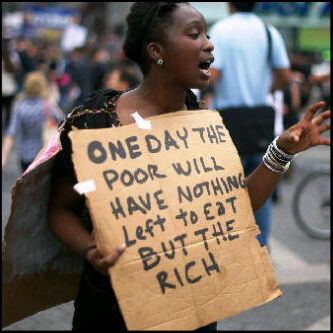
Nigeria’s future is the subject of current sabre-rattling by the government and the people on two sides of the divide.  With much tough-talking and misinformation on both sides, the real mission to secure Nigeria’s future and better our today is being relegated to the  background. Gradually, more people are getting fixated on the price of petrol as the crux of the campaign. People are chanting “on 65 naira we stand”. The battle is not for the price of petroleum products. It is a battle for the rudder of the Nigerian ship, a wake-up call to the  government, buckle up lest we sink!

Every casual supporter of the current people’s action against the government is likely to think this   mass action is directed at Jonathan Goodluck’s government. Far from it, this pent-up anger is directed at the perennial recklessness of government and the impunity of asking the people of Nigeria to suffer more while a few opportunists in power  acquire  more  booties of rulership. Because government is a continuum, an ongoing entity that inherits both assets and liabilities of its predecessors, Jonathan Goodluck must face the good luck of being the president of Nigeria at a time like this and facing the challenge. He must also think about it creatively, almost paternalistic in carving out solutions. He must see this not as an affront to his authority but as direct feedback from his constituents. He must harness this people power to undertake earth-shaking reforms he promised in the polity. He must enlist the people of Nigeria in fashioning out solutions to our collective challenges. The solutions must be owned by the people, signed off in a comprehensive charter and monitored by an independent body.
The solutions to Nigeria’s problems are multi-dimensional and require an eclectic mix  ingenious solutions woven together into an integrated strategy to wean Nigeria off oil dependency, create an infrastructure paradise, diversify the economy, create employment and attack poverty. It is called the P.I.E.S strategy.
The P.I.E.S strategy stands for the four areas of implementation which will drive initiatives and tangible results  to the people of Nigeria:
·     Political
·     Infrastructure
·     Economic
·     Social
This plan is based on a phased withdrawal of the fuel subsidy over a twenty for month period during which the government must take pre-planned steps in the four areas of strategic importance. The plan starts by moving the price of petrol to eighty five naira immediately, one hundred naira in another six months, one hundred and twenty naira in eighteen months and one hundred and forty naira in the twenty-fourth month. This plan addresses the deficit balance of trust which the Nigerian government currently enjoys by allowing the people to see and evaluate the steps taken by the government before moving to the next level. It also allows the government to plan its revenue and phase its promises, rather than promise everything to everyone at the same time.
Why should we increase the price of petroleum products? It is clear to everyone that any form of subsidy compromises both both economic and fiscal success especially in a nation where corruption and inadequate monitoring allows a privileged few to corner the gains and enrich themselves. It is also clear that the economics of subsidy is not sustainable on the long run as it encourages inefficiencies and creates abracadabra econometrics. It allows people to feel at ease with our comatose refineries and import petroleum products for West Africa while Nigeria pays. The policy it too juicy to be transparent and has several points of failure and compromise.
It is also clear that the global economics of oil, the vicissitudes of the global financial system and the turbulence of the oil prices dictate that we must achieve internal price parity  on the long run while ensuring that Nigerians get value for the volume of  trade in this commodity. To achieve this, Jonathan Goodluck’s government must galvanise action in the following areas:


Political
Nigeria’s political structure as it stands now is big, bogus and financially unsustainable. But it has constitutional backing! The constitution supports several duplicated functions and bodies. The government needs to consult widely and take action on the  drain pipes of waste. The following  questions are poignant:
·     Do we really need a government this big ?
·     Do we need really need a minimum of 36 Ministers ? Some of these portfolios are so narrow, they do not need a minister and some of them have two ministers.  Water resources could be merged with Agriculture.
·     Do we actually need 36 states? It is a touchy issue but I think we should explore the matter. Nigeria is just as big as one big state in America!
·     Do we need all the ministries and parastatals ? We need to prune down the number of agencies. We have Nigeria Boundary Commission and a Nigeria Border Community Development Agency.
·     Prune down the Budget! More than half of the 4.2 Trillion naira in the 2012 budget is pork, meant for needless, phantom expenses. I have looked at the budget provisions and it is appalling that  we are spending close to two billion for food in the presidency. We are also buying furniture for the Vice President with over 300 Million naira. If we continue to budget like that, we will soon be bankrupt, even if we paid 500 naira for a liter of petrol. There is too much financial laxity in our budget and it cuts across every Ministry, Department and Agency.
·     Reduce the perks of political office holders. It is an absurdity that our senators earn more than the American president. Let every political office holder take a 70 percent pay cut. Just to remind us, we are a borrower nation!
·     We must limit the size of government cabinet at all levels.
·     We must stop all frivolous foreign trips no matter the guise. We do not need to travel to  get medical attention if we fixed our own hospitals.
·     Create a fast-track court to try corruption cases and impose very stiff penalties combining jail time and forfeitures of illicit wealth.
·     Can we have local government chair persons serve as members of the house(s) of assembly in each state, sitting on Mondays alone, without all the frills and thrills of the current theatre ?
·     Create a special purpose account for the revenue accruing from the proceeds of the petroleum products and inaugurate an independent mix of technocrats, labour unions and international consulting firms.
·     Implement the KPMG report on the NNPC. Privatise the NNPC through a joint venture agreement. Make the organization a lean and professional organization, able to compete with the oil majors.
The government must  send  a  graduated constitutional amendment to the National Assembly and ensure that all of this in six months after the initial increase.

Infrastructure
The sore point of Nigeria’s nationhood is her underdeveloped infrastructure base. The government must come up with a twenty four month infrastructure development plan that will change the current level of infrastructural decay. The government must prioritise the following projects into short term, medium term and long term  objectives:
·     Category One Roads Repairs: Federal Roads must get immediate attention. Six months from the implementation of the first phase of subsidy renewal, all category one roads must be repaired in their current state while we plan on expanding or building new ones within 24 months. The Lagos-Ibadan Expressway, the Sagamu-Benin Expressway, the Onitsha-Enugu-Port Harcourt and the Abuja-Kaduna-Kano expressway are in this category
·     Our Airports and Seaports require urgent attention. They should be given to international firms to build, operate and transfer. We should have port capacity to serve the entire West African sub-region and make our airports aviation hubs in West Africa.
·     We must expand our transportation options beyond roads. We must invest heavily in the rail sector and include safe marine travel in our transportation model.  Each state should come up with a unique transportation model and draw funds from the “subsidy fund” to  implement under supervision.
·     Our petroleum jetties, stations and pipeline require urgent attention. They should be phased for attention. Some of them require expansion (Atlas Cove Jetty) while some of them require outright redevelopment (Mosimi Depot)
·     Health and Emergency Services must be shored up immediately. Just like the PTF interventions, we must highlight primary, secondary and tertiary health institutions for immediate assistance. We must identify some specialist institutions for special capacity building and equipment support to become areas of competence in healthcare, capable of competing with renowned institutions in the world. Once this is achieved within twelve months, political office holder will not be allowed to travel out of Nigeria, even for health reasons. We must institute and implement a robust emergency management agency, capable of responding to minor road accidents and major natural disasters.
·     Power projects must be prioritized and pursued for completion with vigour. The government will publish a list of power projects to be commissioned within a cycle of subsidy withdrawal. These will include all gas-powered turbines, dams and coal-powered power plants. As government has started deregulating the sector, a strong monitoring mechanism should be put in place to ensure that Nigeria and her citizens get the best value from investors in terms of investment and service quality.
·     Education is an area of critical need. The government must create a comprehensive development plan for  Nigerian universities with the aim of making at least six Nigerian universities to be the best in Africa in the next ten years. This requires a roadmap which must be properly articulated and implemented.

Economy
It is clear that the economy needs to be  diversified to move away from the mono-economic lame duck that  we currently have. The government needs to implement the following:
·     Make it easier to start a company in Nigeria. We are currently one of the worst places to  start a business.
·     We must provide a mix of incentives for SME’s  by providing low-interest loans for this sector
·     We must provide adequate incentives for the agricultural sector with an understanding of the potential of the sector to become a very important mainstay of the economy.
·     We must revisit the role of export promotion agencies and banks, providing access to loans for exporters and monitoring for actual implementation.
·     We must create hubs for technological advancement, innovation and entrepreneurship.


SOCIAL CHANGE
The withdrawal of the subsidy will not be complete until the government targets specific programmes at the vulnerable poor and aim to alleviate the pains. The government must do the following:

·     Provide fuel vouchers for indigent people who register with their state government.
·     Provide transport vouchers for  minors and senior citizen who are above 60 years of age
·     Run campaigns for Nigerians to share transportation and use less fuel.
·     Run campaigns to encourage Nigerians to use public transportation.

This plans takes into the Nigerian refineries into consideration as the government has signed agreements for their Turn Around Maintenance.  When they come up and start refining again, it still possible that the price of petroleum products will fall due to the forces of demand and supply.
Just a plan to consider, because there is no magic wand!

Friday, January 6, 2012

The Oily Affairs of a Profligate Nation


I have read and watched several arguments pervading the public domain since the announcement of the removal of the fuel subsidy. I have been very circumspect in pitching my tent during these turbulent times.  

However, it is clear that all Nigerians are justifiably angry. By Nigerians I refer to the majority of people who have their own hands in their own pockets! 

Despite the fervent uproar that heralded this unpopular  government policy,  some things have been achieved. What amazes me is the speed at which these two things have been achieved:

First, the truth is coming out concerning the mono-trade that props-up our nation. Veiled behind contrasting facts, figures and extrapolations is the truth. More people have come out with their own versions of the  real reason why Nigeria needs to stop a subsidy that  should not have existed in the first instance.

Second is that Nigerians have become more perceptive at seeing the big lie that has been sold to them for the past fifty years. 

The government has been a big lie, its policies a poignant reminder of the wickedness of man to man and its appetite for waste compares only to Usain Bolt’s abilities to break his own world records over and over again. Subsequent Nigerian governments have elevated corruption and wasteful spending to a new art form. No stable nation competes with us in this genre, we are record breakers!

Let us briefly examine the origins of the fuel subsidy, and the carnage of catastrophy that has followed. We discovered oil in the southern part of Nigeria and sited refineries in Warri, Port Harcourt and Kaduna. In typical Nigerian style, our refineries were left to deteriorate while Turn Around Maintenance contracts were constantly awarded to incompetent firms. 

Miraculously too, our leaders also forgot to build additional refineries to cater for the burgeoning population. Our three refineries were built when Nigeria’s population was about eighty million people. While we doubled in size, our leaders were more focused on lining their own pockets than planning for a growing population.

As far back as the Babangida years, Nigeria had been experiencing shortfalls between internally refined petroleum products and actual demand for petroleum products.  Professor Tam David West managed the challenge by exchanging crude oil for finished products. He devised a system where countries were paid in crude oil for refining petroleum products, ensuring that nobody made money from the situation.

This problem of lack of internal capacity to refine crude oil is perennial, just that the politicians took over and devised a clever way of making money from their own incompetence.

The politicians created a class of super rich Nigerians who became cohorts in funding elections and perpetuating corrupt people in government. How else can you explain the fact that everyone who has donated two hundred million naira to the presidential campaign fund in the past two elections are all major players in the oil sector? How would they be paid back? SUBSIDY! 

People like Aliko Dangote, Femi Otedola and Wale Tinubu all became purse keepers and financiers for the politicians, empowered and capable to provide cash for political conquest. Some of them barely existed ten years ago! The politicians neglected the refineries, did not build new ones and created the elaborate scheme of phantom subsidy in order to solve their own problems, not ours!

Like all businessmen, the “oil marketers” were quick to sense opportunity. Several of them set up accounts with banks to harness the business opportunity of subsidy, not petroleum products marketing. Sanusi Lamido Sanusi provides insight into these fraudulent dealings in his write up. This is a transcribed copy (in part) of his submission at the Town Hall meeting on deregulation of  refined petroleum products which was held on the twenty-second of December 2011:

“You establish an LC for importing 20,000MT of PMS and the PPPRA says this is at a landed cost of N145 for example per litre. So you know that for every litre in that vessel you will get at least N85 as subsidy. Now you have a number of "possiblities": 

1. You can off load 5,000 MT and bribe customs and other officials to sign papers confirming you offloaded 20k MT. Then do the same across the chain with a paper trail showing you delivered 20k MT to a tank farm, and maybe even that you transported it to Maiduguri entitling you to a share of the price equalization fund. Maybe for N20-N30 per litre youbribe all those who sign the papers. The 15k MT you take to Benin or Ghana or Cameroun and sell at market price thus makin an additional "profit" of N55/ltr on 15,000MT! 

2 you can just forge documents and have them stamped without bringing in anything and collect the subsidy-PPPRA pays based on DOCUMENTS. 

3 you can bring in the fuel, load on tankers, sell some at N65N some at 80 some at 100 some across the land borders. 

You can do all this and no one can catch it or prove it because somebody was paid to sign off on documentss. And with a high enough margin there is too much temptation to be resisted and firepower for bribing officials. 

When I spoke to the house of reps I told them why I was suspecting fraud. It starts from PPPRA "allocations" based on "capacity". You will find a company like Mobil with capacity for say 60,000 MT and a relatively unknown name with a capacity of say 90k MT. Red alert number 1. 

Although PPPRA is supposed to give license only to marketers with a national distribution network you see names of companies where you have never seen a filling station in their name.
I was a chief risk officer in UBA and in FBN for many years approving loans so I know the name of every big player in every industry that nigerian banks lend to as these are among the biggest banks in the country. I see names on the list I don't recognise either from portfolios. I looked at or industry studies over the years. Red alert number 2. 

I studied the papers presented to PPPRA in a short period in 2010 (I won't tell you how I got them!). And I was surprised that on some days over 10 vessels are said to have discharged cargo in lagos on the same day-clearly the same officers stamping and "verifying" that the vessels were SEEN. Is it really realistic that on the same day 13-15 vessels can discharge in Lagos? Red alert number 3. “

According to the same write up, Femi Otedola’s Zenon and AP owe the Nigerian banking system about 220 billion naira in bad loans that have been taken over by AMCON, yet he did not have stock of petroleum products worth a fraction of that amount. You can bet he also did not have the cash in his corporate accounts. More importantly, he could still afford to give the Jonathan/Sambo campaign organization 200 million naira during the election season.

I have taken time to quote the Governor of Nigeria’s Central Bank in order to show you, my reader, the sleaze that makes for an arresting Hollywood thriller. On all sides, you see subterfuge, greed and corruption. You see institutionalized  kleptomania across the value chain, oil marketers, port officials, PPPRA, DPR and bankers who knew the truth and never said it until now!

It is clear to me that the subsidy scheme was created and executed by the government to enrich their friends and themselves. It means the nation budgeted huge amounts of money which we knew was going to be pocketed by a few people.

Why is the Goodluck government removing the subsidy? Profligacy is not sustainable on the long run! They now want us to pay for their incompetence. It is clear that no official wants to let the truth out of its hiding place. We are broke! Our external reserve is down to 27 billion dollars from 80 billion when Obasanjo handed over. 

Our internal debt is 5 trillion naira. External debt is back to 35 billion dollars.  Excess crude oil account is down to zero. We are broke yet the only rich people in Nigeria are politicians and some pastors. Politicians who earn more than every other earthly government and pastors who collect earthly money, lay hands on and promise heavenly bliss to men of shady character. Some of these super rich pastors are not saying anything now. Some of them are speaking as a matter of expediency. Some of them have private jets with which to fly out of Nigeria. They share that same luxury with the  dirty politicians they bless and celebrate with front row seats in their churches.

We need to ask our government what they are getting paid for. Is it the national pride that we currently enjoy or our infrastructure that is out of this world? We still have polio in Nigeria in 2012. We have hospitals that are not fit to treat animals. No government primary school competes with a public school in South Africa. Our universities provide better criminals than scholars. We do not have roads. in the place of roads we have long stretches of death traps designed to keep the population in check through untimely death. We do not have electricity. We have lost our factories to Ghana. Just a few grumbling manufacturers remain, who are yet to get land in Ghana.

We have lost everything we met on the land. Cocoa, palm oil, groundnuts, cotton, cashew and rubber have been forgotten and are better produced by nations who came to learn from us. We have lost our moral compass, our society is fractured, our statehood is threatened. Our citizens are in all prisons around the world. Some of them prefer foreign prisons to Nigeria. Our passport is treated with disdain everywhere you present it. Why should our Senate Leader earn 600 million naira per annum? Why should our senators earn 30 million naira per month? Why should our National Assembly gulp 1.2 trillion naira per annum while we try to save 1.4 trillion from subsidy removal ? Why should our government be this big with special advisers on cassava and beans affairs? Do we need 52 ministers and 36 states? Do we need a Minister for Water Resources when 95 percent of Nigeria cannot recognize a water faucet? Why would our president spend close to a billion on food while close to eighty percent live on less than a dollar a day?  Why should he budget a billion for generators and diesel when he is urging us to believe in his power sector reform? Why does our President need  9 private jets? Why do our governors move around with twenty-vehicle convoys while David Cameron has just two vehicles and one outrider? 

Why should our politicians keep their salaries when Obama slashed his? Why should we continue to be wasteful when the handwriting on the wall says “danger”? Why should we believe this government when it says the subsidy gain will be properly reinvested? Despite my utmost respect for Christopher Kolade, I have this ominous feeling that he is being set up to be rubbished. Same for Alfa Belgore!

Labaran Maku must be suffering from foot and mouth disease if he really used that cavity to announce 1,600 buses as palliative measure for 170 million people. Lagbus has 500 buses. What impact will that make? You mean the government of Nigeria needs to subject her citizens to hardship in order to buy 1,600 buses. On the strength of the initial information on how the  savings will be invested, given by Labaran Maku and the minister for Labour,  the government is bereft of both ideas and dictionaries! 

To move Nigeria forward, we must do the following:
·    Demand more transparency from the government especially in oil dealings and allocations. Remember the way Okonjo Iweala was publishing the allocations to all tiers of government.
·   Demand immediate reduction of the size of this government and its wasteful ways.
·      Demand specific prioritized projects which should be tied to the subsidy savings (if we negotiate a reduction instead of outright reversal).
·      We need to demand same from our state governments, prune down the waste.
·      We need to ensure our protest is peaceful and organized to avoid loss of life.
·      We need to resist provocation and divisionist tendencies.


·    We need to pray for Nigeria. I still believe God can use this moment to make a change in Nigeria.  Pray that anyone who steals from Nigeria’s commonwealth will experience pain and sorrow. Pray for God to help us in the same way he intervened Abacha-wise.
·      Share additional information online, do not stop the flow of information. The more we know, the better we become.

Just an addendum, later today, I shall be publishing specific line  items from Nigeria's 2012 budget to expose the  financial recklessness of this administration that is asking Nigerians to sacrifice. Make sure you check in!

I have posted a new  entry on how our money is stolen through overblown and unrealistic budgets. I picked out line items from the budgetary allocations of the office of the Vice President in the 2012 budget. Please read that post. It makes interesting reading.